


Cataract Surgery
Advanced, Laser-Assisted
Ryan Kim MD Provides expert cataract surgery for patients in Irving, Dallas, and Carrollton areas. Convenient access from Las Colinas, Coppell, Lewisville, Farmers Branch, Grapevine, Euless, Bedford, and Grand Prairie.
What is a Cataract?
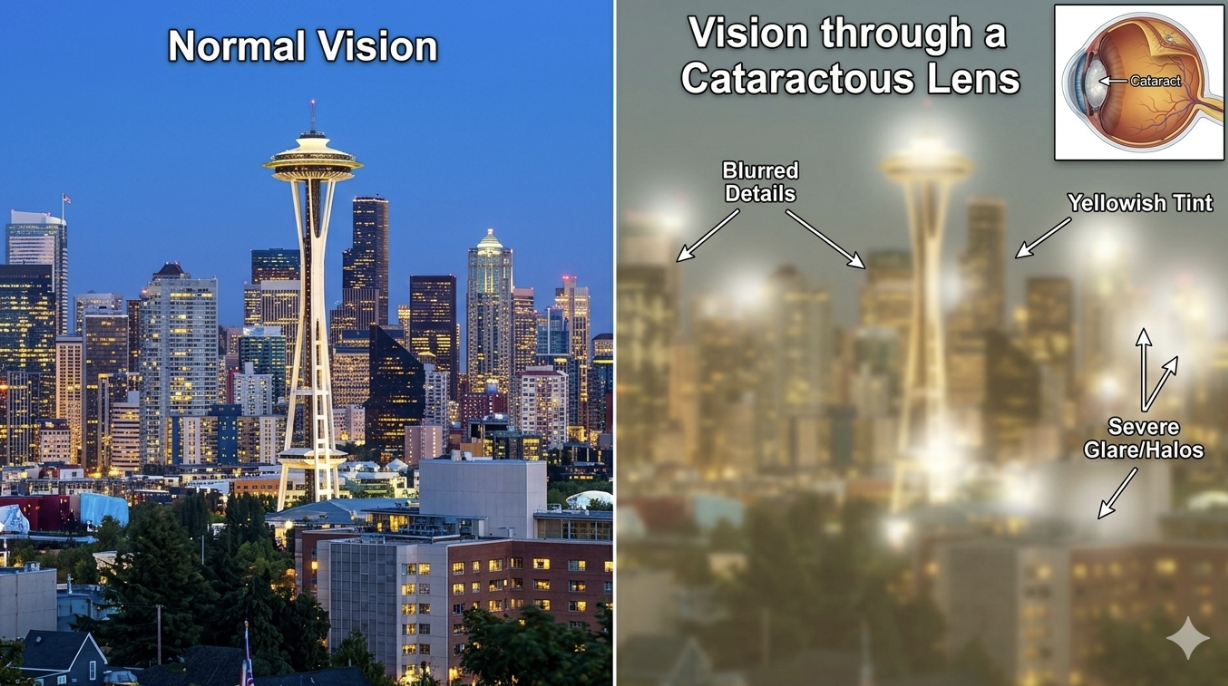
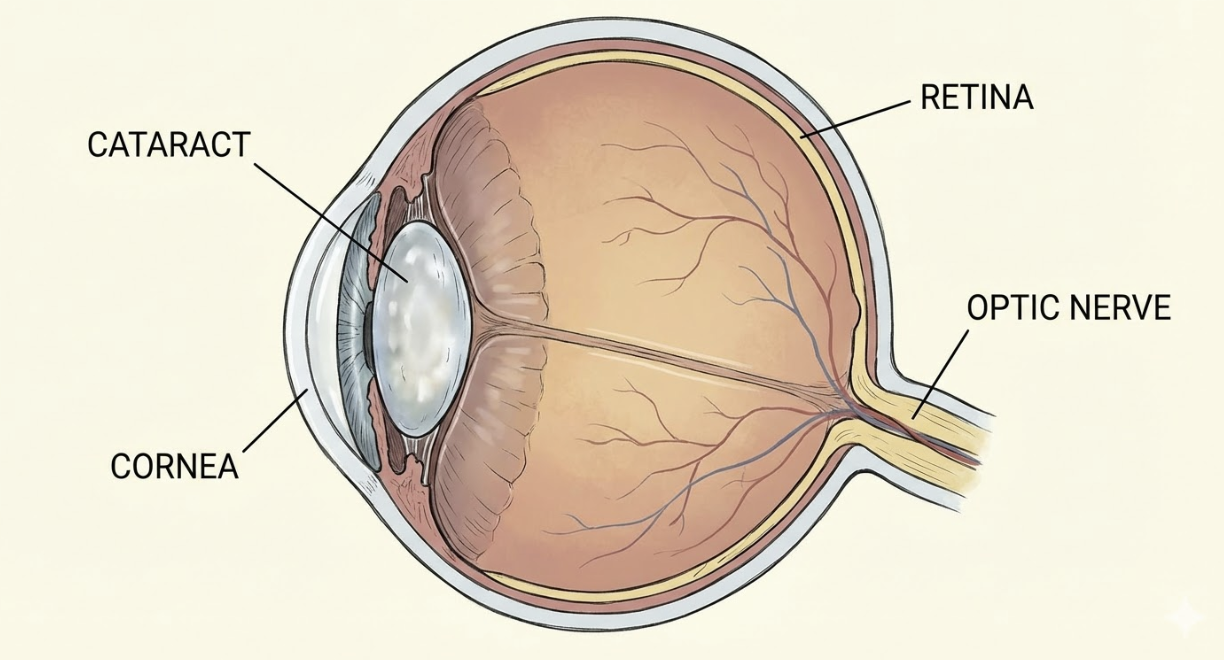
A cataract is the clouding of the eye’s natural lens that used to give you clear vision. Think of the lens like a windshield: when it is clear, light passes through easily with an unhindered view. Over time, with many birthdays, the lens begins to get cloudier, making the "windshield" foggy and/or tinted. This is a natural part of aging, not a disease or a "film" over the eye. You may still be able to see through the fuzzy windshield in the beginning, but eventually will experience a significant reduction in visual acuity and clarity.
Common Causes
Aging
UV Exposure: Long-term exposure to sunlight without protection.
Health Conditions: Diabetes and other systemic diseases.
Medications such as steroids (pills, injections, inhalers, etc.)
Signs and Symptoms
You might notice these changes gradually worsening over time:
Cloudy or Blurry Vision: Like looking through a dusty windshield.
Glare and Halos: Lights (especially at night) appearing too bright or having "rings" around them.
Faded Colors: Colors may seem dull or yellowish. Reduced color contrast
Frequent Prescription Changes and poor best-corrected vision: Your glasses seem to stop working well despite efforts. A good analogy would be, even with a new pair of glasses, if the windshield itself is so dirty, then you cannot see clearly outside the car.
Choosing the Right Procedure
Today, patients can choose between traditional manual surgery and advanced laser cataract surgery, which is fully personalized to your own eyes and lifestyle preferences. The surgical component is covered by insurance for both options, but if you choose personalized, femtosecond laser-assisted cataract surgery, you will need to pay out of pocket for the advanced-technology lens, as well as the use of the femtosecond laser and other additional diagnostic features.




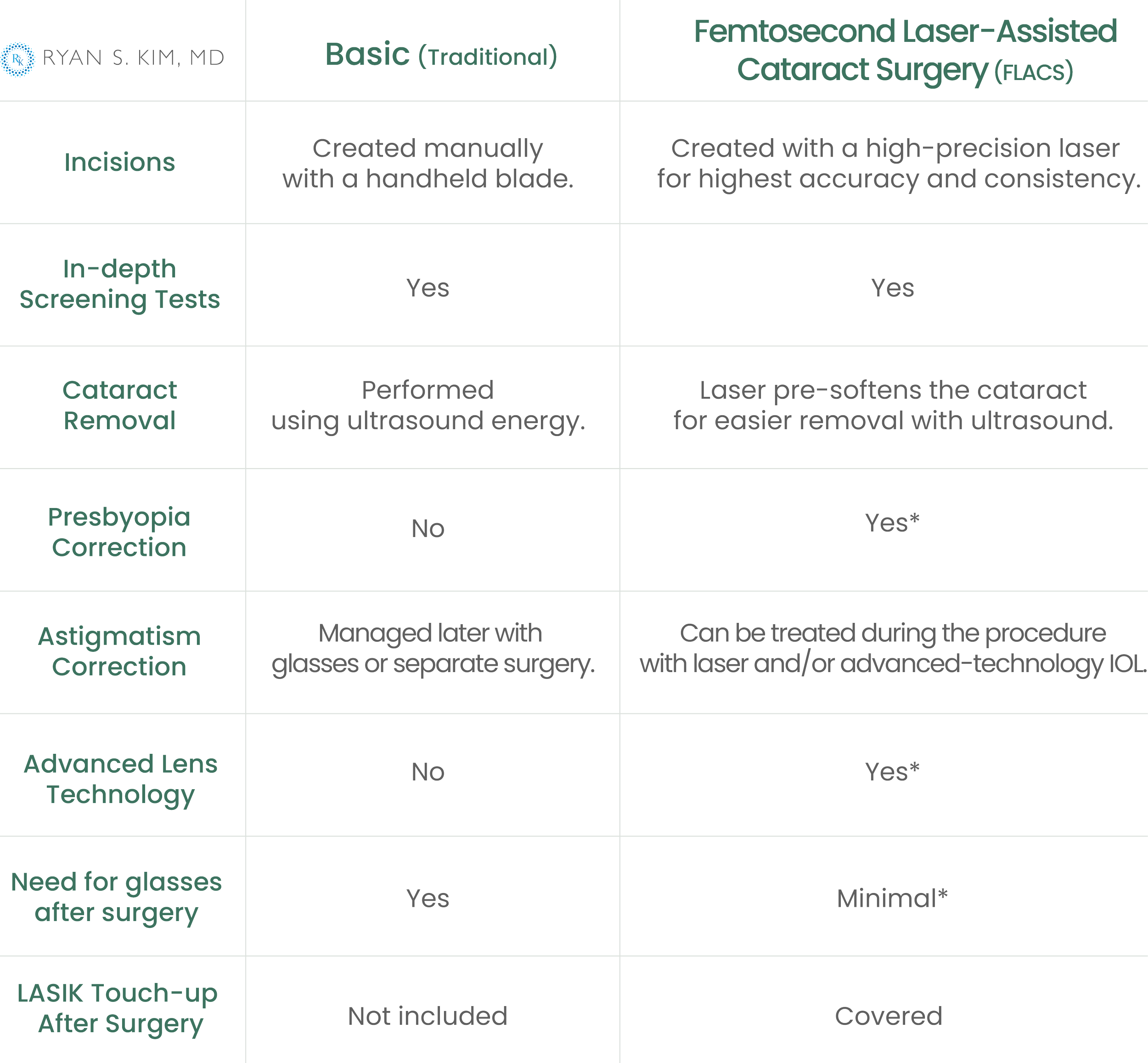
Basic vs. Personalized, Femtosecond Laser-assisted Cataract Surgery (FLACS)
From standard cataract surgery to advanced personalized options, we offer treatment plans tailored to your vision goals, lifestyle, and long-term eye health.
*Although Dr. Kim strives to deliver the best possible outcome, results are not guaranteed. Also, not all patients are optimal candidates for the advanced-technology lens due to their pre-existing eye conditions.

Intraocular Lens (IOL) Options
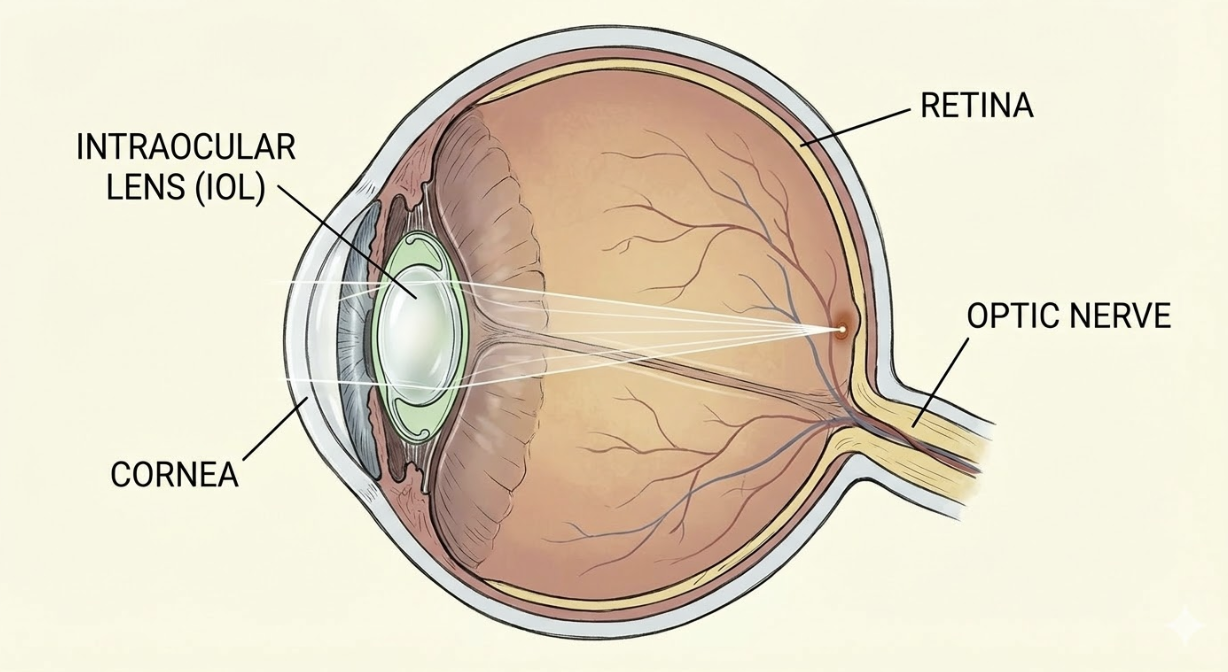
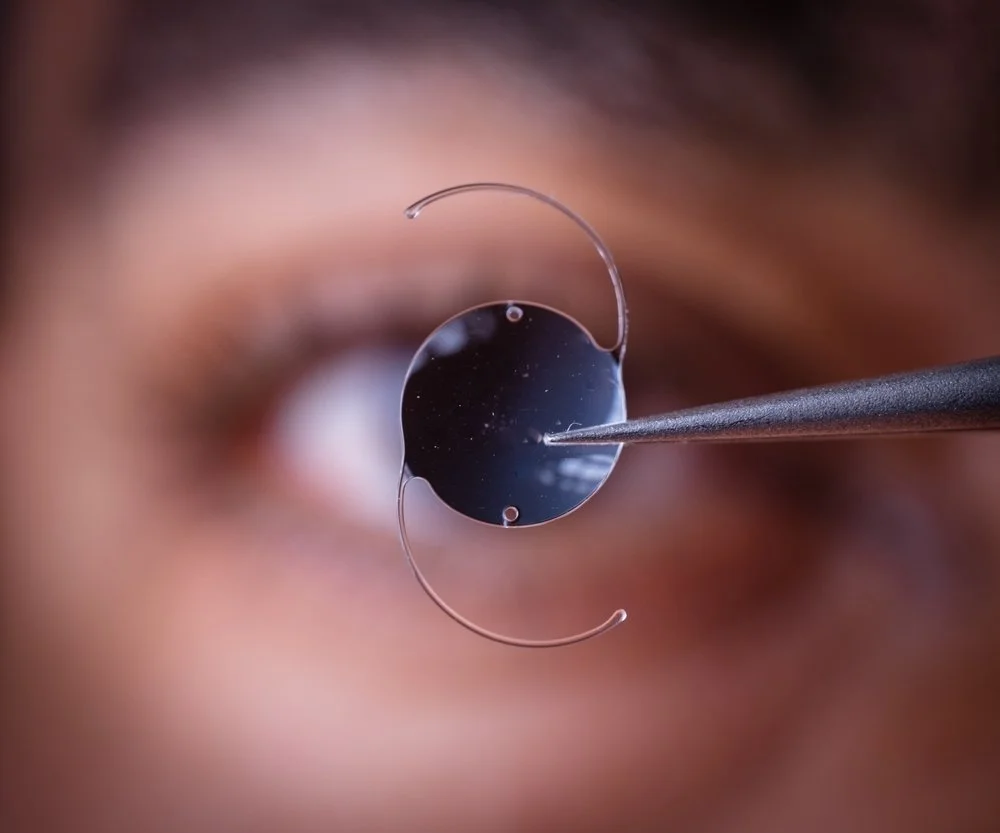
When the cloudy lens is removed, it is replaced with a clear artificial lens called an IOL (intraocular lens).
Monofocal Lens: The "standard/basic" option. In this case, cataract surgery will significantly reduce glare/halo as well as poor night vision. It provides clear vision at one distance (usually far away). You will likely need prescription glasses after surgery to see all zones clearly.
Multifocal Lens: These advanced lenses provide a range of vision (near, intermediate, and far), significantly reducing your dependence on glasses.
EDOF Lens: Extended depth-of-focus lenses provide 2 excellent zones of vision (i.e. far and intermediate).
Astigmatism correction (Toric Lens): Specifically designed for patients with astigmatism to correct blurry/defocused vision caused by an irregular corneal shape. Dr. Kim personally suffers from a high degree of astigmatism that requires regular use of glasses. Astigmatism correction can be added to any of the three IOL options at an additional cost. Dr. Kim emphatically recommends everyone with astigmatism to correct it during cataract surgery to maximize clear visual outcomes.

Common Questions
-
Dr. Kim will perform a thorough clinical exam and provide you with an objective assessment of your vision and cataract severity.
-
It depends! Cataract surgery is mostly an elective procedure, where Dr. Kim will carefully discuss the risks, benefits, and alternatives of cataract surgery. You can rest assured that Dr. Kim will never pressure you to get cataract surgery done. If you state that your cataract is significantly affecting the quality of vision and your daily activities, then it is generally recommended to undergo cataract surgery. It is best to discuss the necessity of your cataract surgery with Dr. Kim in person.
-
Yes, although most patients notice a significant improvement in their vision after cataract surgery, certain eye conditions may limit the final visual potential. Dr. Kim will thoroughly discuss such potential issues with you during the consultation. Also, your eye conditions may preclude you from choosing certain lens options.
-
If you opt for the advanced-technology cataract option, Dr. Kim will minimize the astigmatism you have to ensure the clearest possible visual quality after surgery. Oftentimes, this will include corneal incisions made by a femtosecond laser and/or the use of a Toric lens. The goal is to reduce the degree of astigmatism as much as possible.
-
This is where the surgeon’s expert insights and knowledge shine. Dr. Kim will ask you numerous questions to understand your hobbies, occupation and lifestyle preferences in order to identify the best lens option for you, specifically. Generally, most patients with healthy eyes will enjoy the benefits of advanced-technology lens options, such as a Multifocal or EDOF lens, but these lenses are not covered by standard insurance plans.
-
A monofocal, or standard, lens provides you with clear vision at one visual zone. Most patients who choose a monofocal lens would like to see well at a distance, such as for driving. This leaves them with difficulty seeing up close after cataract surgery. Hence, most patients with a monofocal lens are recommended to wear prescription glasses after cataract surgery. However, you will still notice a significant improvement in the fuzziness of your vision and glare/halos after cataract surgery.
-
The goal of advanced-technology lenses, such as the multifocal or EDOF lens, is to minimize your dependence on glasses in most activities. However, there is still a chance that you may need to wear reading or prescription glasses even after successful cataract surgery.
-
Dr. Kim often employs a method called “Surf and Turf,” where he will implant an EDOF lens in the dominant eye (which he will check for you) and a Multifocal lens in the non-dominant eye. This way, you can enjoy the benefits from both excellent lenses.
-
Rare risks of cataract surgery include retinal tears/detachment, eye infection, and prolonged intraocular inflammation needing further treatment. However, the vast majority of cataract surgery is safe with the use of the most advanced surgical technologies that we are fortunate to have today.
-
Dr. Kim routinely employs a taper regimen for eye drops that you will use for several weeks after surgery.
-
After a routine cataract surgery without issues, you can expect to have clear vision within a few days after surgery. Dr. Kim will provide details of your surgical outcome and recovery during your post-operative visits.
-
One eye at a time, so that you can at least have one good eye to get around after surgery!

Ready to See Clearly Again?
Personalized eye care starts with a consultation.
Schedule your appointment today.