

Pterygium Surgery
Protect Your Eyes from Irritation
Pterygia are frequently referred to as "Surfer's Eye" or "A Disease of Sun and Wind" because they are strongly linked to environmental exposure. The primary driving factors include:
Ultraviolet (UV) Radiation: Chronic exposure to sunlight is the leading cause.
Chronic Irritants: Prolonged exposure to wind, dust, sand, and dry environments.
Because of these triggers, pterygia are most common in people who spend a lot of time outdoors in sunny, windy, or harsh climates without proper eye protection.
What is a Pterygium?
How and Why Do They Form?
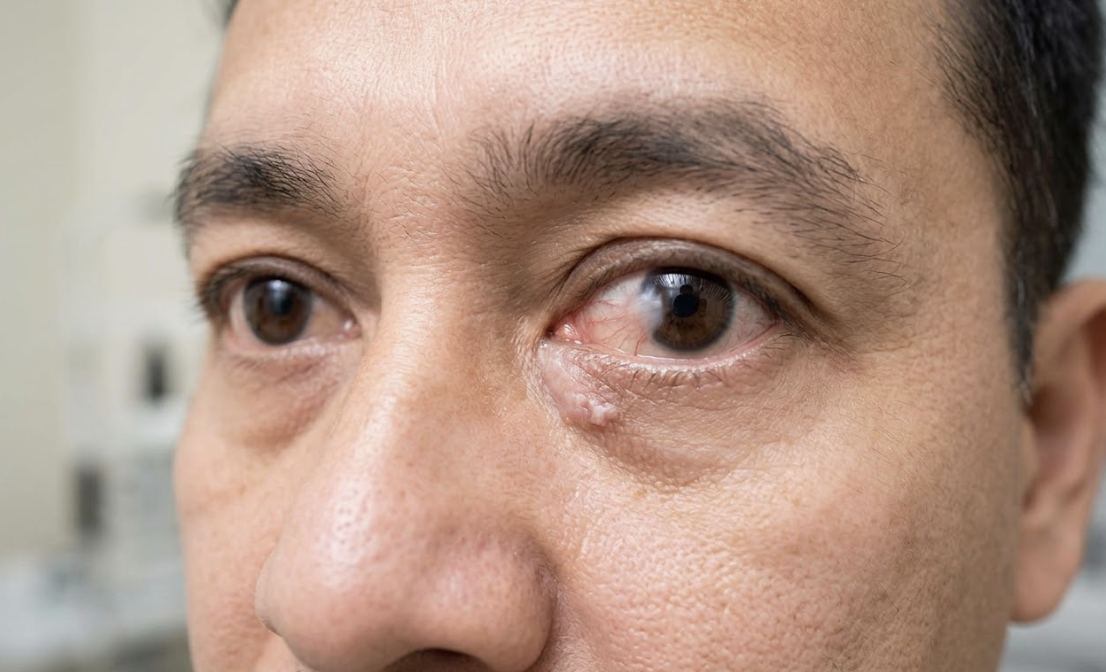
A pterygium (pronounced tuh-RIJ-ee-uhm) is a benign, fleshy, wedge-shaped growth of tissue that develops on the conjunctiva—the clear membrane that covers the white part of your eye. Over time, this fibrovascular tissue can grow out and extend onto the cornea, which is the clear front window of the eye.
While often entirely painless in its early stages, a pterygium can become red, swollen, and irritating. If left untreated and allowed to grow large enough, it can distort the shape of the cornea and cause a significant amount of astigmatism and blurry vision.
When is Surgery Necessary?
Not every pterygium requires surgery. If your pterygium is small and only occasionally irritating, we may simply recommend over-the-counter artificial tears, protective sunglasses, or mild prescription eye drops to manage inflammation.
However, surgical removal is recommended when the pterygium:
Grows large enough to induce astigmatism and blurs your vision.
Continues to grow toward the center of your cornea, threatening your visual axis.
Causes chronic, severe redness, burning, or a persistent "foreign body" sensation that drops cannot relieve.
Becomes a significant cosmetic concern for the patient.
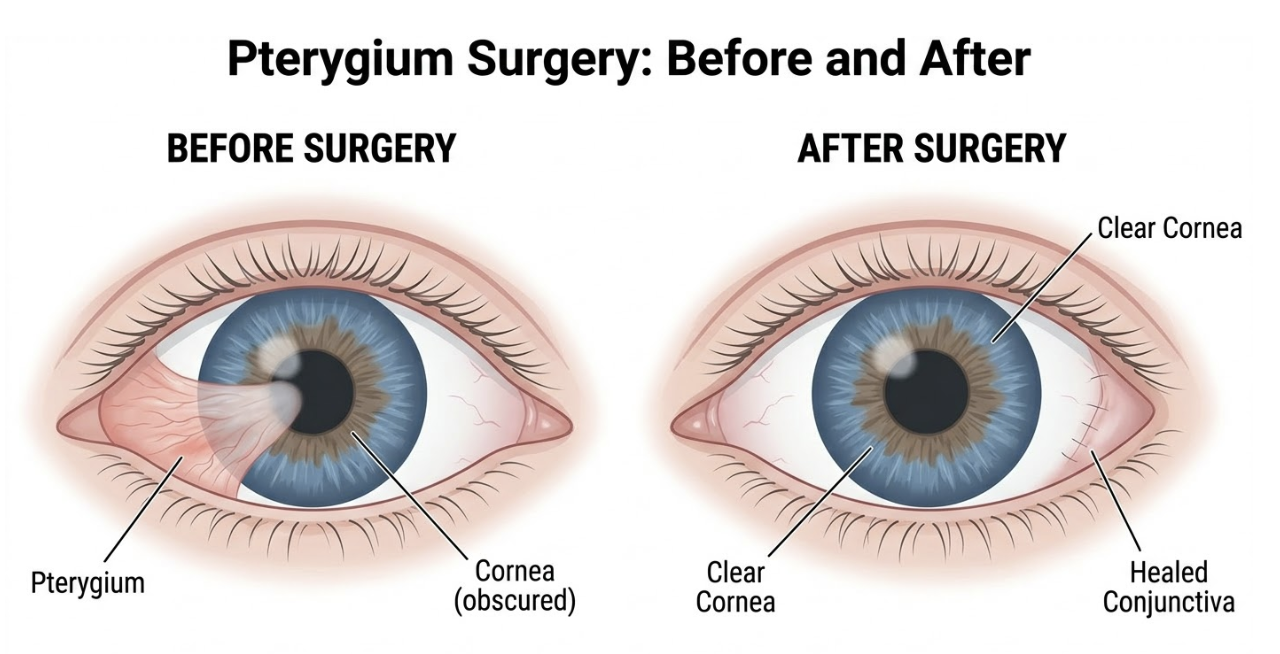

Advanced Surgical Removal (Excision with Autograft)
In the past, simply cutting the pterygium off resulted in a very high recurrence rate—meaning the growth would often come back, sometimes larger than before. Today, surgical techniques are highly advanced, ensuring excellent cosmetic outcomes and a drastically reduced chance of recurrence.
The procedure is performed on an outpatient basis under local anesthesia, meaning you are awake but your eye is completely numb and you feel no pain. It typically takes less than 30 to 45 minutes.
01
Gentle Excision
We carefully peel and remove the abnormal, fleshy pterygium tissue from the surface of your cornea and the white of your eye (sclera).
02
Conjunctival Autograft
To prevent the pterygium from growing back, we perform an autograft. We take a tiny piece of healthy, clear conjunctival tissue from underneath your upper eyelid (where it is hidden and protected from sun damage).
03
Graft Placement
We place this healthy tissue over the area where the pterygium was removed. Dr. Kim often uses advanced medical tissue adhesives (fibrin glue) rather than traditional stitches to hold the graft in place. This greatly improves your post-operative comfort and speeds up healing.
Frequently Asked Questions
-
No. A pterygium is a completely benign (non-cancerous) growth. While it can cause vision problems if it grows over the cornea, it will not spread to other parts of the body. However, Dr. Kim will always send the tissue to the pathologist for confirmation, to ensure that it is not one of the mimickers, such as an ocular surface tumor.
-
With older surgical techniques, recurrence rates were as high as 50%. However, by utilizing the modern conjunctival autograft technique, the risk of recurrence drops significantly—typically to well under 5%. Wearing sunglasses outdoors after your recovery is the best way to keep that risk as low as possible.
-
Because we are working on the sensitive surface of the eye, you can expect your eye to feel scratchy, irritated, and light-sensitive for the first few days. The white part of your eye will remain red for a few weeks as the graft heals. You will be prescribed a regimen of antibiotic and steroid eye drops to use for several weeks to prevent infection, minimize scarring, and ensure a smooth, white surface.
-
The most effective prevention is comprehensive UV protection. Whenever you are outdoors, driving during the day, or near water/snow, wear wrap-around sunglasses that block 100% of UVA and UVB rays. Using artificial tears to keep your eyes lubricated in dry or dusty environments also helps reduce chronic irritation.
-
Yes, most insurance plans will cover the procedure. Dr. Kim’s office will check the eligibility and coverage for you prior to your surgery.